Achieving a deep, reflective mirror finish on granite, marble, quartz, or concrete is one of the most demanding tasks in stone fabrication and restoration. While many operators believe that simply running high-speed machinery will yield a glossy surface, true mirror-like reflectivity—often measuring between 85 to 95 on a refractive gloss meter—requires a systematic understanding of abrasive science.
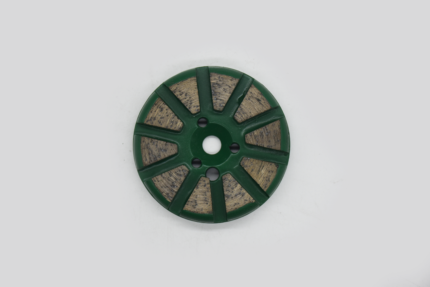
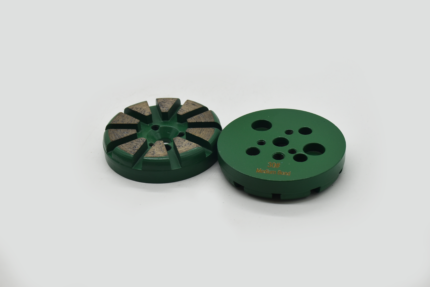
Using high-quality wet diamond polishing pads is the industry standard for securing this level of clarity. This guide explores the mechanical principles of wet polishing and outlines the precise step-by-step grit progression required to deliver optimum results.
The Science of Wet Polishing: Friction and Slurry Management
Unlike dry polishing, which relies heavily on high heat to close the microscopic pores of stone resins, wet polishing relies on water to manage friction and heat. Under dry conditions, localized friction can rapidly raise temperatures to the point where the stone’s mineral structure burns, or the resin matrix of the polishing pad degrades, leaving a stubborn “white mist” or haze.
When utilizing wet diamond polishing pads, water serves three critical functions:
- Thermal Regulation: Water acts as a constant coolant, preventing the resin-bond matrix of the pad from melting and transferring onto the stone face.
- Lubrication: It reduces excessive friction, allowing the diamond grits to shear the stone surface smoothly and evenly rather than scratching it deeply.
- Slurry Extraction: Water flushes away the finely ground stone powder (slurry). If left on the stone, this debris can act as an unwanted abrasive, creating random micro-scratches that ruin the final gloss.
Pre-Polishing Preparation: Setting Up for Success
A mirror finish cannot compensate for a poorly prepared surface. Before mounting your wet pads, ensure the following steps are completed:
Surface Calibration
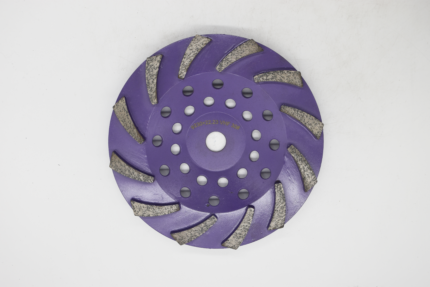
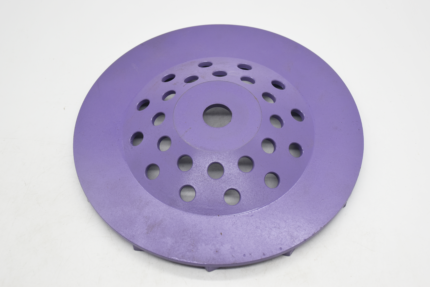
Ensure the slab or floor is calibrated and flat. Any lippage or uneven joints must be removed beforehand using metal-bond grinding wheels or coarse cup discs.
Tool Configuration
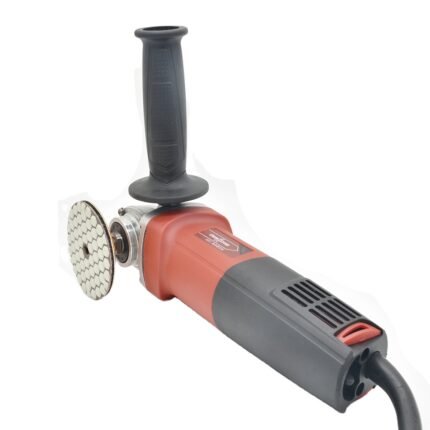
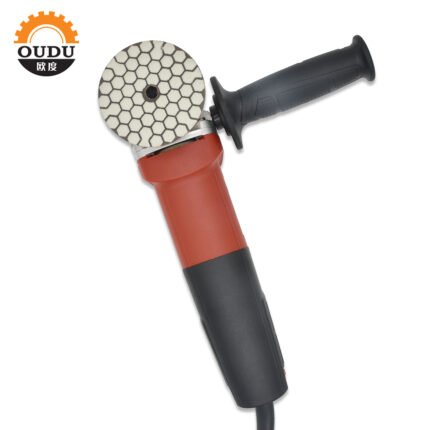
Ensure your handheld polisher or floor grinder is operating within the recommended RPM range. For wet stone polishing, a variable-speed polisher running between 2,000 and 4,500 RPM is ideal. Running at excessive speeds can cause hydroplaning, where the pad floats on a cushion of water without making proper contact with the stone.
Step-by-Step Grit Progression Guide
Systematic grit progression is the golden rule of stone restoration. Skipping a grit or rushing through a stage is the primary cause of a dull, hazy finish. Below is the recommended progression using OUDU brand wet diamond polishing pads.
Stage 1: Coarse Honing (Grits #50 to #200)
These initial steps remove deeper scratches left by previous grinding or calibration tools.
- Goal: Establish a flat, uniform, matte face.
- Execution: Maintain consistent pressure. Water flow should be steady but not overwhelming. If the slurry appears thick and milky, you have the correct balance of water and cutting speed.
Stage 2: Fine Honing (Grits #400 to #800)
This stage begins the transition from a matte to a semi-gloss face.
- Goal: Completely eliminate the micro-scratches left by the coarse pads.
- Execution: Thoroughly wash the stone surface before transitioning to these grits. Even a single particle of #50 grit left on the slab can contaminate the #800 pad, creating deep scratches that will only become visible during the final buffing stage.
Stage 3: Polishing (Grits #1500 to #3000)
At this juncture, the stone surface becomes extremely dense and smooth, allowing light to reflect rather than scatter.
- Goal: Build a rich, clear gloss.
- Execution: Slightly reduce the water flow during the #3000 pass. A slightly drier slurry at the very end of this stage can help burnish the resin bond slightly, accelerating the gloss-building process without overheating the stone.
Stage 4: Locking in the Shine (OUDU Buff Pad)
The final step uses a dedicated Buff Pad (available in black or white depending on stone color) to consolidate the gloss.
- Goal: Achieve maximum clarity and reflectivity.
- Execution: Run the buff pad with minimal water. The objective is to gently polish out any remaining microscopic haze, leaving a highly reflective, mirror-like finish.
Key Variables for Professional Stone Fabricators
To maintain consistency across large-scale projects, operators must control three variables:
- Uniform Pressure: Avoid leaning heavily on the grinder. Let the weight of the machine and the high-grade diamond concentration in the OUDU pads do the work. Over-pressuring leads to uneven wear and localized gouging.
- The Cross-Hatch Pattern: Move the polisher in a consistent north-south, east-west pattern. This ensures that the diamond segments cross the stone grain from multiple angles, preventing directional scratching.
- Water Management: Too much water causes hydroplaning and reduces cutting efficiency. Too little water leads to heat buildup and pad burning. Adjust the water valve until a consistent, thin paste (slurry) is discharged.
Troubleshooting Common Polishing Issues
- Hazy Finish on Dark Stones: This is often caused by skip-gritting or running the final stages too hot. Ensure you do not skip the #800 or #1500 stages, and check that water is flowing adequately.
- Random Scratches Visible at #3000: This is a classic sign of cross-contamination. Always wash down the stone and the backing pad thoroughly between grit changes to remove loose, coarse grains.
Why Choose OUDU Wet Diamond Polishing Pads?
Engineered by Quanzhou Tianli Grinding Tools Co., Ltd., a dedicated manufacturer with over 27 years of research and development experience, OUDU wet diamond polishing pads are formulated to deliver stable performance under rigorous industrial conditions.
By combining high-purity synthetic diamonds with a specialized heat-resistant resin bond, our pads resist glazing and premature wear, ensuring a reliable, predictable gloss progression on every job. We support global distributors with factory-direct pricing, customized private labeling (OEM/ODM), and rigorous quality control.
To receive wholesale pricing, custom formulation options, or to request free samples for your next project, contact our technical team today.