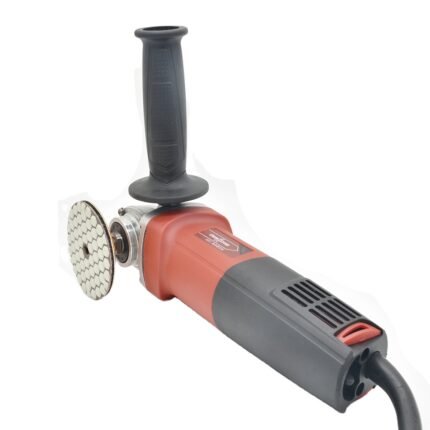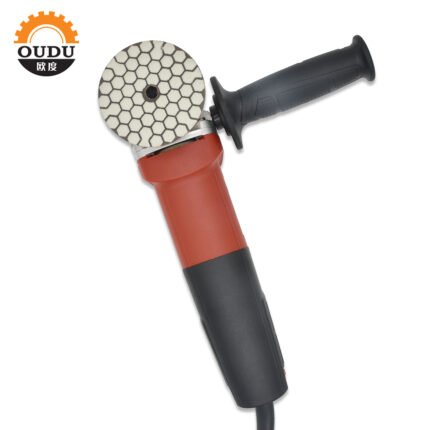
Wet polishing has long been regarded as the standard for achieving maximum gloss on natural and engineered stone. However, modern fabrication demands have shifted. On-site residential installations, indoor repairs, and water-sensitive materials often make wet grinding impossible. In these scenarios, stone fabricators must rely on dry diamond polishing pads to achieve a professional, deep-gloss reflective surface—commonly referred to in the trade as a “dry-shine.”
While dry polishing offers immense convenience and eliminates messy water runoff, it introduces distinct physical challenges: high friction heat, rapid pad wear, and hazardous silica dust. This comprehensive guide explains the science of dry polishing and outlines the techniques required to secure a clear, haze-free finish.
The Physics of Dry Polishing: Friction and Thermal Resistance
The primary hurdle in dry polishing is thermal accumulation. When polishing wet, water constantly absorbs and dissipates friction heat. In a dry setup, that heat is transferred directly into the stone and the pad itself.
If temperatures exceed the tolerance limit of standard resin bonds, two critical failures occur:
- Stone Burning: Excessive heat alters the mineral structure of the stone, creating a yellow or dark grey scorch mark that is incredibly difficult to remove.
- Pad Glazing: The resin matrix of the pad melts, enveloping the diamond crystals and rendering the tool ineffective.
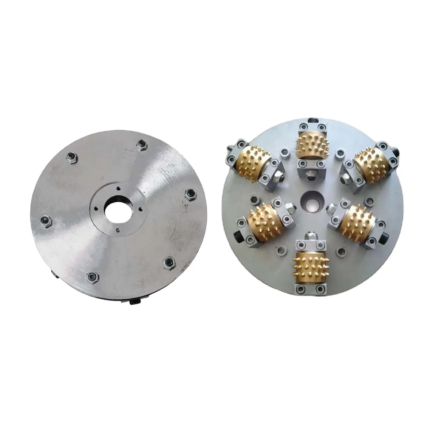
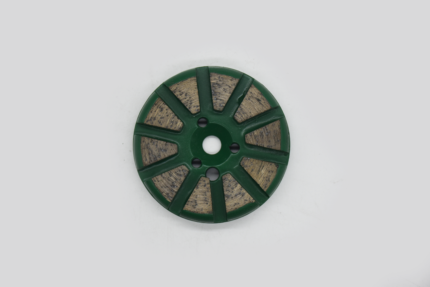
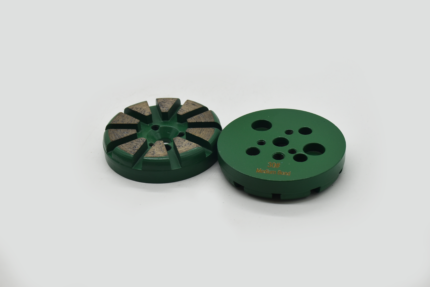
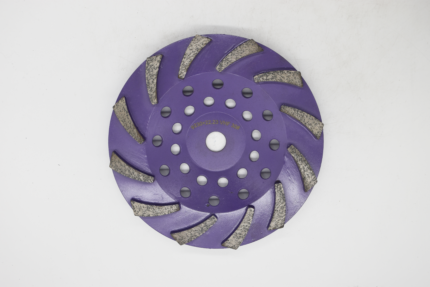
To counter these issues, professional dry diamond polishing pads, such as those engineered under the OUDU brand, are formulated with specialized, high-melting-point polyimide resin matrices. Additionally, they feature segment geometries with deep channels—like honeycomb or segmented wind-slot patterns—designed to actively circulate air and self-expel stone debris.
Dust Management and Safety Standards
Dry stone polishing generates significant amounts of respirable crystalline silica (RCS) dust. Prolonged inhalation of these fine particles is linked to silicosis and is strictly regulated by occupational safety standards (such as OSHA in the United States).
For safety and compliance, fabricators should always employ:
- An Integrated Dust Shroud: A rubber or plastic shroud attached to the hand grinder that surrounds the polishing pad.
- A HEPA-Filtered Vacuum: Connect the shroud to an industrial vacuum system with HEPA filtration to capture up to 99.97% of fine particulates.
- Proper Personal Protective Equipment (PPE): A certified N95 or half-mask respirator should always be worn during dry grinding.
Step-by-Step Dry Polishing Process
Just like wet polishing, dry stone restoration relies on a logical, incremental grit progression. Skipping steps will leave hidden scratches that degrade the final shine.
1. Honing Stage (Grits #50, #100, #200)
- Objective: Remove scratches left by shaping or profiling router bits and flatten joints.
- Execution: Run the grinder at a medium speed. Apply steady, moderate downward force. Ensure you clean the surface entirely between each pass to prevent coarse grit from scratching the next phase.
2. Refinement Stage (Grits #400, #800)
- Objective: Transition the stone from a dull, flat finish to a smooth, satin sheen.
- Execution: Reduce the downward pressure slightly. The stone should begin displaying a soft reflection at the #800 stage.
3. Polishing Stage (Grits #1500, #3000)
- Objective: Achieve maximum density and deep reflection.
- Execution: Allow the stone and the dry pad to cool for a few seconds if you notice the stone surface warming up. A hot stone face is highly susceptible to resin transfer and discoloration.
4. Final Buffing (OUDU Dry Buff Pad)
- Objective: Bring out the final deep luster and eliminate microscopic haze.
- Execution: Run the buff pad at a slightly lower RPM for a brief, dry pass.
Essential Operator Techniques to Prevent Surface Burning
Because dry diamond polishing pads lack water cooling, the operator’s technique is the primary safeguard against burning the stone:
Keep the Machine in Constant Motion
Never allow the grinder to hover over a single spot, even for a second. Use smooth, continuous sweeping or circular motions. This distributes friction heat evenly across the entire working surface.
Control Your RPM
Do not run dry polishing pads at maximum speed. For hand-held work, maintain a velocity of 2,000 to 3,000 RPM. Higher speeds generate exponential heat without improving cutting efficiency.
Implement Cool-Down Intervals
When working on large, dark granite surfaces or quartz, allow the material to rest briefly between grit progressions. Dark stones absorb heat quickly and are highly vulnerable to thermal cracking and staining.
Troubleshooting Dry Polishing Issues
- The Pad Stops Cutting (Glazing): If the pad glazes over due to overheating, run it briefly over an abrasive dressing stone or concrete block to strip away the melted resin and expose fresh diamond grits.
- Stone Turns Yellow/Brown: This is caused by thermal burning. You must regress to a coarser grit (typically #200 or #400) to grind away the damaged layer before progressing back up.
Choose OUDU for High-Performance Dry Polishing
To secure a premium “dry-shine,” fabricators need dry diamond polishing pads that are specifically designed to resist high thermal stresses.
Manufactured by Quanzhou Tianli Grinding Tools Co., Ltd., our OUDU brand dry polishing pads utilize highly advanced resin binders and dense synthetic diamond concentrations. Our unique honeycomb pattern is engineered to optimize chip removal and air circulation, offering professional durability and consistent gloss retention without the need for water cooling.
We support stone tool distributors and wholesalers worldwide with stable factory-direct supply, competitive wholesale pricing, and full OEM/ODM branding customization.
Contact our technical team today to learn more about our industrial dry polishing solutions or to request free samples for evaluation.